On Monday [March 19, 2018], two very good analysts, Jamarl Thomas and Hard Bastard, had a discussion on Thomas’s program.
They talk much about Jimmy Dore. But, they also discuss The Young Turks. They discuss a lot. And I won’t reveal too much of what gets covered—otherwise, there would be not point posting it.
The discussion lasts a good hour. (Running time says 70 minutes.)
I will have blog entries on Thursday and Friday. So, this blog entry, posted Tuesday [March 20, 2018], cancels out having one on Wednesday.
Mainstream news broadcasters in this current period remind me of one fictionalized from a past generation: Ted Baxter, from the fictional WJM in Minneapolis, Minnesota, played by Ted Knight (1923–1986), from The Mary Tyler Moore Show. Watch this video and, perhaps, you may understand what I mean. It was 41 years ago on this date that marked the final episode of The Mary Tyler Moore Show, on CBS, on March 19, 1977. Please take a few short minutes for this clip.
Here from The Jimmy Dore Show, but without the intended humor of TheMary Tyler Moore Show and the character Ted Baxter, let us look at some of the “Current News–Baxter Broadcasters”:
UPDATE—03.19.2018 @ 01:45 p.m. ET: This video just uploaded to YouTube. It is commentary fairly in line with the blog topic:
I want Hillary Clinton to continue speaking her mind most especially on her Election 2016 loss to Donald Trump.
It is important Hillary Clinton expresses herself. It is also important U.S. citizens be aware, just in case they are not sufficiently informed, where Hillary Clinton is coming from. (And we can gain even more insight from those who are #StillWithHer and where they are coming from.) I appreciate Hillary Clinton letting us know what she thinks and feels. I encourage the former First Lady of the United States, the former U.S. Senator from New York, and the 67th U.S. Secretary of State to continue speaking for however much longer she will. It makes my voting easier. And now for this Open Weekend [OW]…
“If you look at the map of the United States, there’s all that red in the middle where Trump won,” Clinton said. “I win the coast, I win, you know, Illinois and Minnesota, places like that.”
“I won the places that represent two-thirds of America's gross domestic product,” Clinton continued. “So I won the places that are optimistic, diverse, dynamic, moving forward. And his whole campaign, ‘Make America Great Again,’ was looking backwards.”
Donald Trump won the 2016 United States presidential election, in a Republican pickup, with the 24 states, worth 206 electoral votes, carried by his party’s losing nominee from 2012, Mitt Romney. Trump then flipped six states (indicated in light red on the above electoral map): Florida, Iowa, Michigan, Ohio, Pennsylvania, and Wisconsin. Trump also won a pickup of the 2nd Congressional District of Maine. Total: 30 states, plus Maine #02, for an initial electoral-vote score of 306. (Both Trump and Clinton had faithless electors. That is why I use the word initial.)
The analyses can be broken down this simply:
In 2012, as the losing nominee, Mitt Romney carried three of the Top 10 populous states: Texas (38 electoral votes), Georgia (16), and a Republican pickup of North Carolina (15). Those are worth 69 electoral votes. The Top 10 populous states represent 256 electoral votes. So, the re-elected Democratic incumbent 44th U.S. president Barack Obama carried the other seven states and their 187 electoral votes. What did Trump do? He flipped four which were in the 2012 column for Obama. Naming them and where they rank: No. 3 Florida (29), No. 6 Pennsylvania (20), No. 7 Ohio (18), and No. 10 Michigan (16). Those comprise +83 electoral votes. Added to the Romney/Trump states and their 206 electoral votes, that was enough for Trump to win the election.
Documentary filmmaker Michael Moore sensed it coming. And it manifest. Trump won Election 2016 primarily with his Republican pickups of a quartet of Rust Belt states: Ohio (18), a long-running bellwether state; Wisconsin (10), last Republican for Ronald Reagan’s re-election of 49 states and 525 electoral votes in 1984; and both Pennsylvania (20) and Michigan (16), last Republican for George Bush and his 40 states and 426 electoral votes in 1988. These four states comprise +64 electoral votes. Added to the Romney/Trump states and their 206 electoral votes, they were exactly enough to elect Trump.
I want to go over some more details just how badly Hillary Clinton lost to Donald Trump.
Losing Ohio and Florida were losing two bellwether states. But losing both Pennsylvania and Michigan was even more profound. Over the last ten [10] presidential elections of 1980 to 2016 (personal disclosure: I was ages 9 to 45 in those years), the only presidential loser—in both the Electoral College and U.S. Popular Vote—who carried both states was 2004 Democratic nominee John Kerry. The two states voted for the winners in the five consecutive elections of the 1980s (Republicans Ronald Reagan and George Bush) and 1990s (Democrat Bill Clinton); for popular-vote winner Al Gore in 2000; for Democratic pickup winner Barack Obama in 2008 (and his re-election in 2012); and for Republican pickup winner Donald Trump in 2016. These two states are not passe. Pennsylvania and Michigan voted for 8 of the last 10 winners. When considering states’ reliability in voting for presidential winners, I would score states which voted for the popular-vote winners of 1824, 1876, 1888, 2000, and 2016 with half-credit (while states which carried for those years’ presidential winners get full credit). Given 2000, you can add half-credit to both Pennsylvania and Michigan. So, this means Pennsylvania and Michigan were good for 8.5 of the last 10 winners—and that is a reliability rate, during this specific time frame, of 85 percent. Ohio is the only state which voted for all winners (full 100 percent). Nevada (carriage for 2016 Hillary Clinton) is at 95 percent. New Mexico (carriage for 2000 Al Gore and 2016 Hillary Clinton) and Florida (carriage for unseated 1992 George Bush) are at 90 percent. And then comes this Rust Belt duo at 85 percent. Pennsylvania and Michigan—demonstrating they were willing to vote for Obama and Trump (covering both major parties)—are not to be dismissed. (By the way: Fellow Rust Belt Wisconsin voted the same as Pennsylvania and Michigan, from 1980 to 2016, with exception of 1988. It was ahead one election cycle having flipped and carried for Democratic nominee Michael Dukakis.)
Comparing the Democratic Numbers: 2016 nominee Hillary Clinton underperformed 2012 re-elected Barack Obama. The national 2012-to-2016 shift, toward Republican pickup winner Donald Trump, was +2,115,581 votes. The Rust Belt quartet of Republican pickups—Ohio, Wisconsin, Pennsylvania, and Michigan—shifted 1,663,025 votes. So, 78.60 percent of Trump’s national shift came from just those four states. This is why I sum it up as Trump having won Election 2016 primarily through the Rust Belt.
As the 2016 Republican presidential pickup winner, Donald Trump also flipped a host of [pickup] states’ counties (not in his political party’s column in decades). Among them: Wisconsin’s Kenosha (Kenosha, 1972) and Vernon (Viroque, 1984); Pennsylvania’s Erie (Erie, 1984), Luzerne (Wilkes–Barre, 1988), and Northampton (Easton, 1988); Michigan’s Isabella (Mount Pleasant, 1988) and Saginaw (Saginaw, 1984); Ohio’s Montgomery (Dayton, 1988), Portage (Ravenna, 1988), and Trumbull (Warren, 1972); Iowa’s Clinton (Clinton, 1984); Des Moines (Burlington, 1972), Dubuque (Dubuque, 1956), and Muscatine (Muscatine, 1984). This also happened with a county in a notable state which did not carry for Trump: Colorado’s Pueblo (Pueblo, 1972).
I would conclude that Hillary Clinton lost very badly. Not badly in a way like the wrong side of an electoral landslide (carriage of ten or less states). But, profoundly badly. To lose states—previously considered among the “Blue Firewall”—which hadn’t carried Republican since the 1980s. To lose state counties which hadn’t carried Republican since 1980s Reagan and/or Bush or 1972 Nixon or 1956 Eisenhower. To lose to one of her three suggested—as reported by WikiLeaks—“Pied Piper Candidates,” the ex-host of a NBC reality-competition series. That is bad. Profoundly bad.
This latest thing from Hillary Clinton is a reminder—but as just one more example—why it is good she is not the 45th president of the United States. (Since he is among 17 from the U.S. Senate’s Democratic caucus who recently joined Republicans to vote for possibly eliminating the Dodd–Frank Wall Street Reform and Consumer Protection Act, I can also mention it is good Tim Kaine is not the 48th vice president of the United States.) Hillary Clinton is not only out of touch. Hillary Clinton lacks, to put it kindly, good judgment.
I leave this blog entry with a video covering this very topic from Jamarl Thomas. He includes a map of the United States which is based on the carriages of the United States’ 435 congressional districts for Donald Trump vs. Hillary Clinton.
This is the second (of four) blog entries for the month of March noting the milestone birthday of a person in music who I greatly appreciate.
Quincy Jones—spectacularly versatile and experienced—turns 85. He was born March 14, 1933 in Chicago, Illinois. Wikipedia describes “Q” as follows: “[Quincy Jones is] an American record producer, actor, conductor, arranger, composer, musician, television producer, film producer, instrumentalist, magazine founder, entertainment company executive, and humanitarian.”
When it comes to all that—why go on?!
There has been a whole lotta living in Quincy Jones—at least from what we know of his career, which dates back a good six decades—and he used to be married to Emmy nominated actress Peggy Lipton of the 1968–1973 ABC drama series The Mod Squad. They are the parents of actress Rashida Jones.
As you can see, from the below videos, Quincy Jones composed the opening theme music for the NBC comedy series The Bill Cosby Show (1969–1971) and Sanford and Son (1972–1977).
We know Quincy Jones perhaps most especially from his period of producing albums for the late Michael Jackson: Off the Wall (1979), Thriller (the 1983 Grammy winner for Album of the Year), and Bad (1987, another Album of the Year Grammy nomination). But, he also produced commercially successfully albums in the 1970s, 1980s, and 1990s under his name: Sounds…and Stuff Like That!! (1978); his 1981 Grammy nominee for Album of the Year, The Dude; and his 1990 Grammy winner for Album of the Year, Back on the Block. Jones won Producer of the Year Grammys for The Dude, Thriller, and Back on the Block.
Quincy Jones has received Oscar nominations for scoring In Cold Blood (1967), The Wiz (1978), and The Color Purple (1985), among his overall count of seven. Although he never won a competitive Oscar, the Academy of Motion Picture Arts & Sciences awarded Jones the 1994 Jean Hersholt Humanitarian Award.
Quincy Jones won the 1976–77 [prime-time] Emmy for Achievement in Music Composition for a Series (Dramatic Underscore) for the landmark ABC miniseries Roots. Quincy Jones was among the recipients at the Kennedy Center Honors in 2001.
In the meantime, I will present ten [10] selections of music from Quincy Jones. (Although they are separate, the opening and closing theme to The Bill Cosby Show should really count as a two-part.)
There was a recent and outstanding interview between host Katie Halper and Jimmy Dore. As a subscriber of several podcasts, I happened to come across it. And it the subject of this blog entry.
I have embedded that interview at the top.
Halper and Dore discuss a number of topics, as one can see from the title, and this includes the divide between those who supported Hillary Clinton and those who supported Bernie Sanders for the 2016 Democratic nomination for president of the United States.
This embedded interview is 55 minutes. There is more. But, I am not a Patreon member. So, this is at least something. It is a lot.
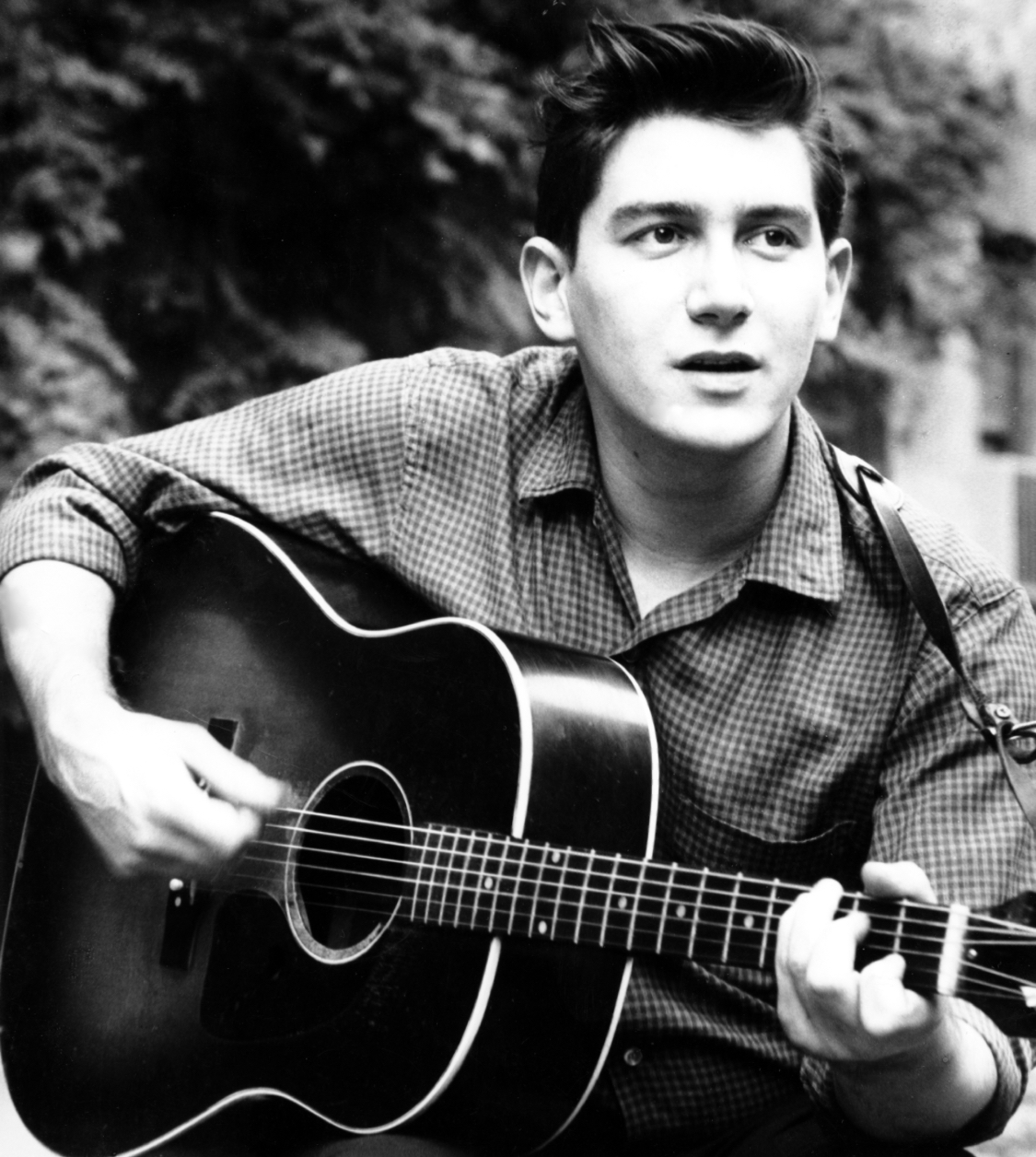
There is one part of the interview in which a song is played of the late folk singer Phil Ochs (12.19.1940–04.09.1976), above. It is his 1966 satirical recording “Love Me, I’m a Liberal.” (More info: Wikipedia — “Love Me, I’m a Liberal”.) It says a lot with what we have today. I will share the lyrics. (They are easy to find on the Internet.)
I cried when they shot Medgar Evers Tears ran down my spine I cried when they shot Mr. Kennedy As though I’d lost a father of mine
But Malcolm X got what was coming He got what he asked for this time So love me, love me Love me, I’m a liberal
I go to Civil Rights rallies And I put down the old D.A.R. I love Harry and Sidney and Sammy I hope every colored boy becomes a star
But don’t talk about revolution That’s going a little bit too far So love me, love me Love me, I’m a liberal
I cheered when Humphrey was chosen My faith in the system restored And I’m glad the commies were thrown out Of the AFL–CIO board
I love Puerto Ricans and Negros As long as they don’t move next door So love me, love me Love me, I'm a liberal
The people of old Mississippi Should all hang their heads in shame I can’t understand how their minds work What’s the matter—don’t they watch Les Crane?
But if you ask me to bus my children I hope the cops take down your name So love me, love me Love me, I’m a liberal
Yes, I read New Republic and Nation I’ve learned to take every view You know, I’ve memorized Lerner and Golden I feel like I’m almost a Jew
But when it comes to times like Korea There’s no one more red, white and blue So love me, love me Love me, I’m a liberal
I vote for the Democratic Party They want the UN to be strong I attend all the Pete Seeger concerts He sure gets me singing those songs
And I’ll send all the money you ask for But don’t ask me to come on along So love me, love me Love me, I’m a liberal
Sure once I was young and impulsive I wore every conceivable pin Even went to the socialist meetings Learned all the old union hymns
Ah, but I’ve grown older and wiser And that’s why I’m turning you in So love me, love me Love me, I’m a liberal
This current month of March will feature blog entries on the milestone birthdays—on separate dates—of four artists whose music I greatly appreciate and who have had a lasting impact. (The “Entertainment Weekend” threads, which will be suspended for the remainder of March, will return on hold Friday, April 6, 2018. That is the weekend following Good Friday and Easter.) Here is the first of those four artists…
James Taylor, who has won three Grammys for Best Male Pop Vocal Performance (1971’s “You’ve Got a Friend,” 1977’s “Handy Man,” and an updated 2001’s “Don’t Let Me Be Lonely Tonight”), turns 70 on March 12, 2018.
Born March 12, 1948, in Boston, Massachusetts, Taylor’s career breakthrough came in 1970 with “Fire and Rain,” which garnered him 1970 Grammy nominations for both Record of the Year and Song of the Year.
His biggest LP hit was JT, which garnered him a 1977 Grammy nomination for Album of the Year, and which included “Secret O’ Life,” “Traffic Jam” and, my personal favorite, “Your Smiling Face.” As noted above, not only did Taylor win a Grammy for his pop vocal work but JT won Producer of the Year for Peter Asher. (This was the year The Eagles won Record of the Year for “Hotel California” and Album of the Year was awarded to Fleetwood Mac for Rumours.)
Taylor did not have as great a level of commercial success in the 1980s. (Not to imply that all good music must be a commercial hit!) But, his albums That’s Why I’m Here (1985), which included the self-titled track as well as “Only One” and “Everyday,” and Never Die Young (1988), with the self-titled track as well as “Sun On the Moon” and “Sweet Potato Pie,” were pretty good. (I thought Never Die Young was underappreciated.)
In 2016, Taylor was among the honorees at the 39th Kennedy Center Honors.
James Taylor was married to fellow singer–songwriter Carly Simon (who won the 1988 Oscar for “Let the River Run,” from Mike Nichols’s Working Girl), from 1972–1983; Kathryn Walker, the retired Emmy winning actress (1976’s The Adams Chronicles), from 1985–1995; and he has been married since 2001 to Caroline Smedvig, an executive with Boston Symphony Orchestra. He has four children.
Here is the trailer showing James Taylor—as an actor and as a lead—in Monte Hellman’s Two-Lane Blacktop (1971). It is available on Blu-ray and DVD from Criterion Collection. Two-Lane Blacktop also stars a trio, each no longer alive, who are the great Warren Oates (1928–1982), Laurie Bird (1953–1979), and The Beach Boys’s Dennis Wilson (1944–1983).…
Here is a two-part interview, from 2015, between Tavis Smiley and James Taylor: